
The Texas Law a National Study Guide Won't Teach You
A national study guide is written to sell in every state, which means anything true only in Texas gets left out by design — not an oversight, just not that guide's job. The State portion of the Texas exam is built the opposite way: every one of its 40 scored questions is Texas-specific. Here's the section where that shows up most sharply — the topics with no national equivalent at all.
Special Topics: 5 items, 11 subjects, all Texas law
TREC's own content outline groups eleven distinct legal areas into a single 5-item "Special Topics" section of the State portion. A national guide's index simply has no chapter for most of these:
- Community property — Texas is one of only nine community-property states. Property acquired during a marriage is presumed jointly owned regardless of whose name is on the deed, which changes who has to sign what at closing in ways a common-law-state guide never has to explain.
- Homestead protections and tax exemptions — Texas's homestead exemption is unusually strong, protecting a primary residence from most creditors and capping how much a taxing authority can raise its assessed value in a given year. Most states offer nothing comparable.
- The Deceptive Trade Practices Act (DTPA) — a Texas consumer-protection statute with real teeth (treble damages in some cases), and one a licensee can be liable under independent of TREC's own disciplinary rules.
- Wills and estates — how Texas probate law affects who can actually sign a contract to sell inherited property, and when.
- Landlord-tenant issues — Texas Property Code rules on security deposits, habitability, and the lockout process, covered in more depth in our Texas landlord-tenant lesson.
- Foreclosure and short sales, recording statutes, mechanic's and materialman's liens, the Veterans Land Board, HOAs, and equitable interest round out the section — each a real, testable topic with Texas-specific mechanics.
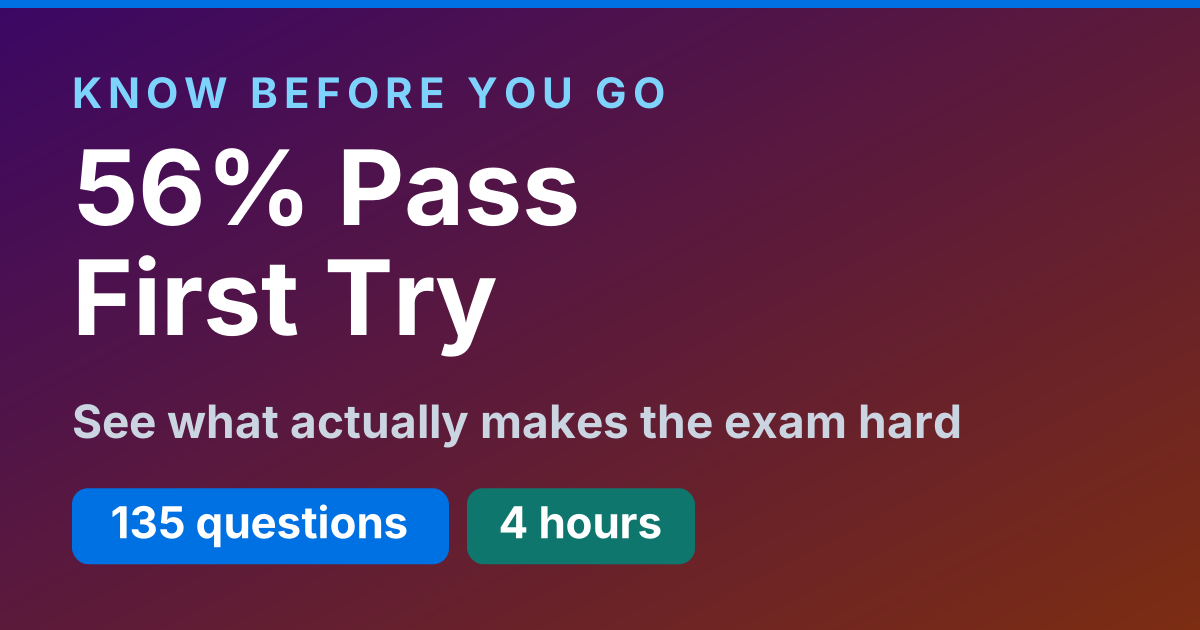
See what actually makes the Texas real estate exam hard, straight from TREC data.
Read the breakdown →
The Texas real estate exam is on-demand — no waitlist, no test window. Schedule whenever you're ready.
See how scheduling works →
See how you'd score before paying anything — no card, no signup.
Start free quiz →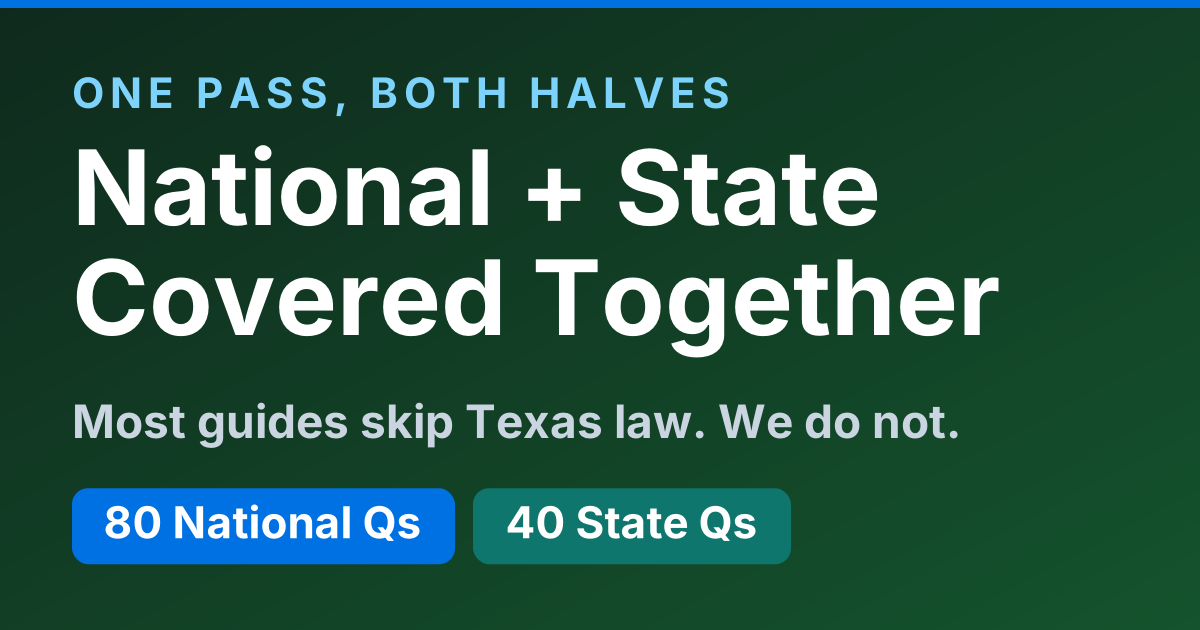
Most guides skip Texas law. We do not — one pass covers both halves of the exam.
See what is covered →Standards of Conduct: the largest source of ethics questions, and it's not generic ethics
At 9 items, Standards of Conduct is the third-largest State-portion section, and it's not a restatement of general professional-ethics principles — it's TREC's own rules: grounds for license discipline, trust account handling, fee-splitting rules, rebate rules, and advertising requirements specific to what TREC allows a licensee to say and how. A national ethics chapter covers NAR's Code of Ethics, which is a different document with different obligations.
Agency/Brokerage: the largest State section, and the most procedural
At 11 items, Agency/Brokerage is the single largest topic area on the State portion. It covers intermediary practice (a Texas-specific structure for representing both parties in one transaction), a broker's disclosure duties, the broker-sales agent relationship structure, minimum-service requirements, and appropriate use of unlicensed assistants — all defined by the Texas Real Estate License Act, not by general agency law.
Why this matters for how you study
None of this is exotic or rare — it's 25 of the State portion's 40 scored questions (Standards of Conduct, Agency/Brokerage, and Special Topics combined), well over half. A study plan built primarily around a national guide, with Texas law treated as a short add-on chapter, is structurally under-preparing for the majority of this portion. See our full breakdown of both portions for how the rest of the State content outline is organized.
Where to actually learn this
Our Texas State lessons are built around exactly this content outline — TREC rules, disclosure, closing, and landlord-tenant law explained from first principles, not summarized in a single afterthought chapter the way a national guide treats them. For the fuller legal picture behind each of these topics — the actual statute, not just the exam item count — see our complete guide to Texas real estate law.
Frequently Asked Questions
What Texas-specific topics are on the State portion of the real estate exam?
Does a national real estate study guide cover Texas law?
What's the difference between TREC's Standards of Conduct and NAR's Code of Ethics?
- Texas Sales Agent State Law Content Outline (Pearson VUE) — Sections III–VI: Standards of Conduct, Agency/Brokerage, Contracts, Special Topics


